


You’re staring at the ceiling at 3 a.m. again. Sweating, restless, body aching for something it used to depend on. Maybe you’ve had enough—of the hangovers, the lies, the emptiness.
And now the question hits:
Can I get clean on my own?
Or do I really need to go to rehab?
It’s not an easy question. Especially if you’ve already tried to white-knuckle it before. Maybe you even succeeded... for a while.
But here's the truth no one likes to admit:
Trying to get sober alone isn’t noble. It’s dangerous. And for most, it leads straight back to the place you swore you’d never return to.
Going It Alone Sounds Appealing, But It's Risky
There’s a certain pride in doing it yourself. No clinics. No group therapy. No awkward circles of strangers clapping when you say your name.
We get it.
Maybe you’re scared of losing your job. Maybe you don’t want to tell your family. Maybe the idea of being in rehab for alcohol or drug addiction feels like admitting defeat.
But solo recovery means no medical detox. No structure. No accountability. Just you... and your cravings... and every trigger waiting outside your front door.
Some people do manage to quit without professional help. It’s called “natural recovery,” and it can work in cases of mild addiction or if there’s strong social support. But even then, the success rate is low.
Most people who try to get clean on their own relapse.
And relapse can kill you.
For substances like alcohol, benzos, and opiates, detoxing without medical support isn’t just unpleasant. It’s dangerous. Alcohol withdrawal, in particular, can be fatal.
In fact, the National Institute on Drug Abuse puts it bluntly:
"Treatment enables people to counteract addiction’s powerful disruptive effects on the brain and behavior and to regain control of their lives."
Without treatment, you’re flying blind.
Why Rehab Works (Even If You Think You Don’t Need It)
Let’s break down what makes rehab different—and why it works.
1. Safety First: Medical Detox
Withdrawals are unpredictable. In inpatient rehab, you’re monitored by professionals. Medications ease symptoms. Complications are handled safely. You’re not alone in a room, praying you don’t seize.
2. Structure = Stability
Your days are mapped out. That structure isn’t just about filling time—it’s about breaking patterns. It helps rebuild routine and momentum in the early days when everything feels shaky.
3. Therapy That Actually Helps
You’re not just quitting a substance. You’re dealing with what drove you to it.
In rehab, trained therapists help you unpack trauma, grief, or whatever’s underneath the surface.
Most people never get that far on their own. They stop using, but not hurting—and that pain has a way of pulling you back in.
4. A Community Who Gets It
You might not think you need group therapy. But being around people who truly understand? That’s powerful.
Keith Humphreys, professor of psychiatry and behavioral sciences, put it best:
“If you want to change your behavior, find some other people who are trying to make the same change.”
In our program, that community comes without the clinical coldness. You’re surrounded by others who get it, not just because they studied it, but because they lived it.
The Science Is Clear
A meta-analysis of alcohol recovery found that 43% of treated individuals remained abstinent in the short term, versus just 21% who received no treatment.
Another long-term study found that participants who received no help were far less likely to achieve three-year remission, and more likely to relapse repeatedly, than those who entered treatment or AA.
In plain English?
Rehab doesn’t just help you quit. It helps you stay quit.
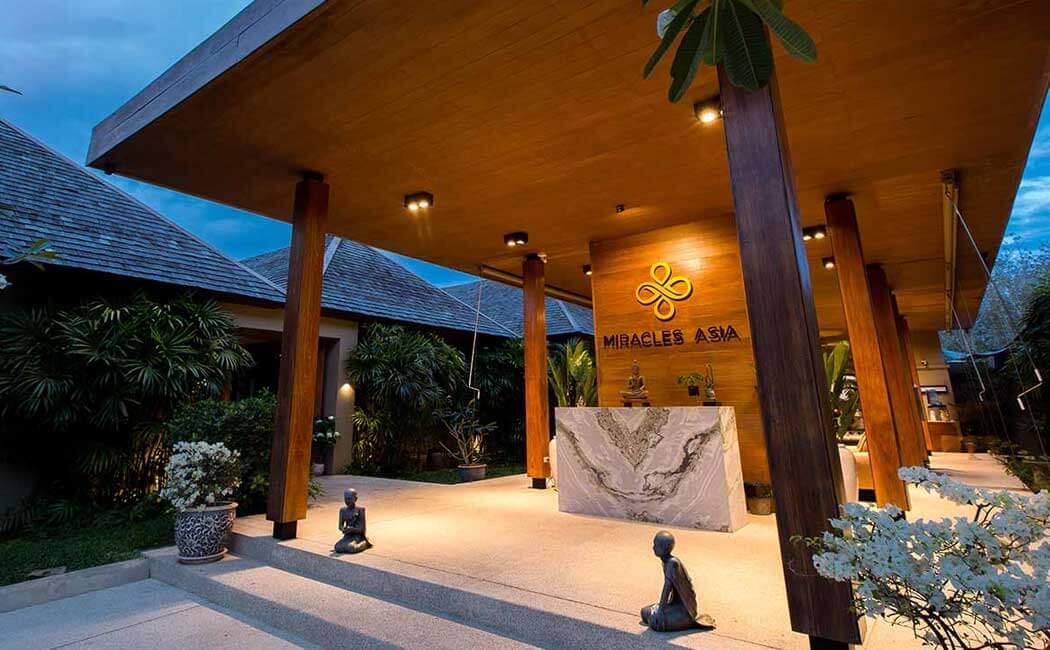
At Miracles Asia, 85% of guests who stay with us for 60 days achieve at least one year of sobriety. We focus on more than just the detox. Our aftercare program, 1-on-1 therapy, and deep personal work all play a key role in those results.
What About the Ones Who Relapse After Rehab?
Rehab significantly reduces your risk of relapse compared to going it alone, but it’s not a certainty. It’s not bulletproof.
So yes, some people relapse. Even after doing the work.
Why? Because addiction isn’t always about pain. People relapse when things are going well, too. Boredom, stress, shame, even celebration… it can sneak back in.
Some people get it the first time. Others take five. That’s not failure. That’s addiction.
But the quality of the program matters.
Surface-level treatment won’t hold up when life hits. That’s why relapse prevention strategies, personalised therapy, and aftercare aren’t extras, they’re essentials.
We pride ourselves on our success rates because we go deep. We get to the stuff under the surface. And we build a plan around you, not a one-size-fits-all model.
What About Cost, Work, and Family?
We hear this all the time.
You’ve got responsibilities. A job. Kids. Bills. Rehab feels like a luxury.
But here’s the question: How long can you keep pretending everything’s fine?
The cost of not getting help can be much higher. Emotionally, physically, financially.
And if you’re looking for private rehab in Thailand, with 1-on-1 therapy, experienced staff, and real outcomes?
That’s where we come in.
The Final Word
You don’t have to do this alone.
Yes, some people manage natural recovery. But most don’t. Most suffer. Most relapse.
There’s no shame in asking for help. In fact, it might be the most courageous thing you ever do.
And if you’re ready, if you know you need more than just willpower, we’re here to help.
In the words of our co-founder, Mark Heather:
“This will be the last rehab you’ll ever need.”






 We’re Ready to Help You
 United States : +15734643712
  Thailand : +6625440097
  Australia : +61866296243
  United Kingdom : +448081697855
  Israel : +9720506380038
  Netherlands : +31652661831